Leave Your Message
In terms of automotive safety even in the recent past, there are still improvements with the latest technology and those improvements are innovations. Such example is the Rear View Camera, one of the most important components in decreasing accident rates and raising safety levels while on the road. According to the National Highway Traffic Safety Administration, reverse crashes contribute to about 292000 injuries and over 200 fatalities each year in the United States. Compared to other solutions that have not been specifically implemented, the Rear View Cameras have proven to be a cost-effective solution to not less than 40% reduction in backup collision rates. As part of safety regulations progression, this need is commanding upward demand.
The Shenzhen Ziyang Xing Technology Co., Ltd. has always been in such innovations since its establishment in 2014. This company specializes in designing and producing automotive electronic and video display systems. The company has now gained experience years in crafting and manufacturing these innovative components like LCD driver motherboards and camera modules, so Ziyang Space could also take a seat for the increasing attention of the market on safety and by keeping an elite standard of Rear View Camera System fit in vehicles using regulatory compliance, prevents one from accidents, and promotes accident prevention for a safer driving environment.

The rear view camera has proved itself of great merit as an eye behind the back bumper aside from also playing a part as proactively reducing the risks of stunts. With their increasing city and developing roads, the need for improved safety features become steeper. Ideal for every modern car, the cameras do significantly decrease the numbers of collision accidents reversal occasions. The proliferation of these cameras into cars can be demonstrated by good evidence of efficiency in the arenas of accident rate reduction. Statistics show that a lot of collisions take place while in low-speed maneuvers like parking or reversing. Minimized associated hazards through the vision or clear view that rear view cameras give drivers of the area just behind their vehicle should save pedestrians, cyclists, and properties alike, thus saving costs in time. Moreover, not only safety is assured by rear view cameras for the occupants of the vehicles, but in the broadest possible sense, the safety culture would remain instilled in the driver to maneuver much more cautiously than would otherwise have happened. Newer generations of safety standards will thus automatically include the rear view cameras since they will automatically be included in the development targets of manufacturers with consumer protection in mind. And the needs of technological advances promise even further away improvements to be made on these systems, thus securing their place as part of the road safety strategies for many coming years.
In recent years, rear view cameras have gained recognition as a crucial safety feature in vehicles, thereby influencing accident rates. Before these technologies saw wide application, statistics had highly alarming data on backover incidents as they relate to vulnerable groups such as children and the aged. In the years leading to rear view camera adoption, thousands of injuries occurred annually, hence the impetus for safety proponents to seek improved means to enhance visibility and reduce Blind Spots.
The introduction of rear view cameras has greatly impacted accident rates. Studies have correlated an almost 30% decline in backover accidents with the introduction of the technology. The visibility gained through rear view cameras helps drivers see pedestrians and obstructions and gives them a sense of awareness while reversing. This statistical evidence proves that rear view cameras work to avert probable collisions and save lives.
Besides, there is an advantage in terms of cost. While it appears somewhat expensive to install rear view cameras, the reduction in accident-related expenses such as medical costs, repair costs, and insurance claims evidently surpasses the initial financial outlay. Further, stronger investigations into accident data will support the inclusion of rear view cameras as a standard feature in vehicles, whereby enhancing a safer driving environment for all road users.
The implementation of rearview cameras has brought vehicle safety to a higher dimension, assisting greatly in accident prevention. A recent cost-benefits analysis has raised some questions as to whether these systems should be installed on new vehicles. The National Highway Traffic Safety Administration (NHTSA), for instance, estimates that in the U.S. alone, rearview cameras might prevent from 58 to 69 deaths and 1,200 injuries every year. This would indicate that the installation of rearview cameras enhances safety and also extends major economic advantages through the reduction of costs related to accidents.
Despite the promising potential for safety systems, the uptake has, in some markets, been much below expectations. With the GB-15084 standard coming into effect in China on July 1, 2023, the installations of Camera Monitor Systems (CMS) for vehicles have been running behind forecasts. This contrasts with international examples, such as the ECE R46 standard created in 2016, which has led to more widespread adoption in Europe. Such discrepancies raise issues regarding regulatory compliance and consumer awareness concerning the life-saving potential of rearview cameras.
Reliability of that technology is very valuable regarding building trust, as shown by the recall of VW vehicles, about 84,000 in the U.S., because of failures with rearview cameras. A properly operating camera is necessary for avoiding accidents while enhancing overall effectiveness. Thereby, given that the above has happened, one sure way that manufacturers and regulators can forge together toward the minimization of the safety benefits of rearview camera systems, resulting in an evident reduction in the accident rate, is through recruitment and proper implementation.
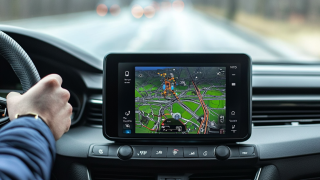
The incorporation of advanced technologies into modern cars is getting into our grasp on the tactics of driving safety. One good example of high technology in the car includes using rearview cameras, which facilitate the role the equipment plays in improving driver awareness and with reducing blind spots. Rear view cameras offer a clear view of the part of the area directly behind a vehicle and just previously fuzzed out by the traditional rearview mirror. By being wider and more accurate, the camera creates a significantly lower chance of accident risk when the vehicle is reversing.
In addition, the capability of the camera is beyond viewing alone; new systems have included dynamic guidelines that assist the driver during tight space and parking situations. It not only assists with a visual cue for novice driving but also works as another set of eyes to even the most seasoned motorist. Such systems are further enriched by using object detection alerts to inform the driver concerning a potential hazard that may be temporarily outside their line of sight. Thus, the entire driving experience becomes much more secure, as well as the rates of accidents to a minimum, bringing about safer roads.
As the vehicle technology advances, so does the approach to using these tools specific to reverse camera installations. Such systems are proven statistics having correlated impacts on establishing safety for the drivers and, thus, ensuring the improvement of safety in roadways. Advanced camera systems are not just about the technological improvement but are also considered critical assets of modern automotive safety plans with an emphasis on making everything visible and eliminating as much as possible blind spots.
The rising awareness toward vehicle safety has encouraged lawmakers worldwide to enact laws to urge the installation of rear view cameras on vehicles. These cameras not only effectively reduce the risk of accidents during the act of backing out, but also fit within the larger safety framework of minimizing fatalities on the roads. Legislative action in its entirety tends to push manufacturers into investing in advanced safety technology, such that it becomes an inherent part of the vehicle's features rather than an extra accessory.
Also, the push for rear view cameras forms part of a larger trend whereby governments recognize how critical technology is in ensuring public safety. Other industries are searching for low-cost solutions to tackle principal safety challenges. Through rear view camera mandates, public authorities are not simply ensuring compliance; they are investing in interventions that give quantifiable safety returns. This reflects the findings in many other industries wherein effective integration of technology means appreciable risk reduction; when well-conceived, safety regulation can significantly boost the over-all wellness of the community.
Cameras have come around very far indeed. A last chapter in the live chronicles of enhancing road safety is rear view camera technology, which many case studies world over have proven to reduce accidents and injuries substantially after the adoption of rear view cameras. An example is empirical evidence from areas where these cameras were made compulsory, indicating about two-thirds reduction in collisions while reversing and with poor visibility. This is not just hearsay; it is based on broad studies that show that those fitted with rear cameras have better statistics in relation to backing accidents compared to those not.
Quite apart from this, the use of rear view cameras was also in line with the trend toward smart driving systems. At the recent China Automotive Research International Conference, experts argued the need for sophisticated data-driven safety measures in commercial vehicles and advocated for favorably safe-cost technologies for the emerging markets in such devices. The comparative effectiveness of rear view cameras has revealed how important such acceptable technologies were becoming in placating risk on our roads. While the industry continues in its evolution, stepping into more sophisticated systems, these case studies will go a long way in establishing parameters for design development in future innovations aimed at safer driving experiences.
However, rear view cameras have also proven to be a blessing in disguise in the driving experience in modern vehicles, though it has altered the way consumers will look at the automobile before actually buying it. Safety features like rear view cameras are of utmost importance for a prospective buyer in evaluating choices. These innovative technologies have lowered accidents due to invisible blind spots in vehicles. Consumers now consider safety more than anything else, when it comes to buying cars.
Moreover, safety-feature campaigns have been successful in conditioning consumer minds. Whenever a consumer perceives that a car has rear view cameras, he links the vehicle with safety and modernity. This knowledge adds value to the desirability of the car and turns into brand loyalty among consumers who appreciate protective technologies. Manufacturers then have to evolve further, in the process keeping safety at the fore of all innovations in car designs.
In such a world where information flows in abundance, consumers are increasingly educative about the advantages that safety features provide. Due to this increase in awareness, informed decisions are brought about, thus forcing manufacturers to make certain that these high-tech safety options are standard equipment, not just offerings. The clear outcome of such a market trend is that people would take safety features like rear view cameras very seriously in their considerations of consumer behavior concerning the purchasing trend and attitude toward industry standards.
The evolution of rear view camera technology is transforming the landscape of road safety, with implications for both drivers and passengers. Recent reports estimate that the smart rearview mirror market will reach $5.9 billion in 2023, witnessing a greater than 13% CAGR from 2024 to 2032. The rapid expansion in the market demonstrates how automotive technology is being used for accident prevention, thus increasing comfort and convenience.
For instance, there is the "all-weather zero-latency ultra-clear electronic rearview mirror" system in the soon-to-be-released Avita-12, showcasing how advanced camera technology offers enhanced visibility and lessened glare. Such advancement in technology can greatly reduce accident rates by giving drivers better visibility in low-visibility situations. It will give rear view cameras a chance to enhance situational awareness in a driving environment.
The advancement of camera systems could therefore be good in lessening rear-end collision risks while enhancing the overall safety of roads. With innovations becoming available in the industry and increased focus on safety suites, the effects of these technologies are likely to change our perspective towards their implementation in vehicle design and functionality in the coming years. In this regard, it may be predicted that manufacturers like Buick, which recently launched the 2025 Century, will be integrating such safety applications into their top-end models, allowing for safety considerations that have become a major priority in vehicle development.
Governments are promoting rear view cameras to enhance vehicle safety, reduce accident risks while reversing, and improve overall road safety through advanced safety technologies.
Case studies indicate that vehicles equipped with rear view cameras experience significantly fewer backing-related accidents compared to those without, particularly in areas with limited visibility.
Awareness of safety features like rear view cameras greatly influences consumer preferences, with buyers increasingly prioritizing safety over other factors when selecting vehicles.
Marketing campaigns that highlight safety features enhance the desirability of vehicles equipped with rear view cameras, associating them with safety and modernity, which fosters brand loyalty.
Legislation encourages manufacturers to invest in safety technologies, making rear view cameras a standard feature that provides a quantifiable return on safety investment.
The advancements in rear view camera technology are part of a broader movement towards intelligent driving systems, emphasizing data-driven safety measures in commercial vehicles.
Yes, mandating rear view camera installations is seen as a cost-effective solution to critical safety challenges, leading to significant reductions in accident rates.
As consumers become more educated about safety features, they demand advanced options as standard in vehicles, which drives manufacturers to innovate.
Rear view cameras support the overall strategy of minimizing road fatalities by integrating technology to enhance public safety and reduce risks associated with reversing vehicles.
As the industry evolves, consumer perception of safety features like rear view cameras will increasingly influence purchasing trends and lead to the inclusion of more advanced safety technologies.